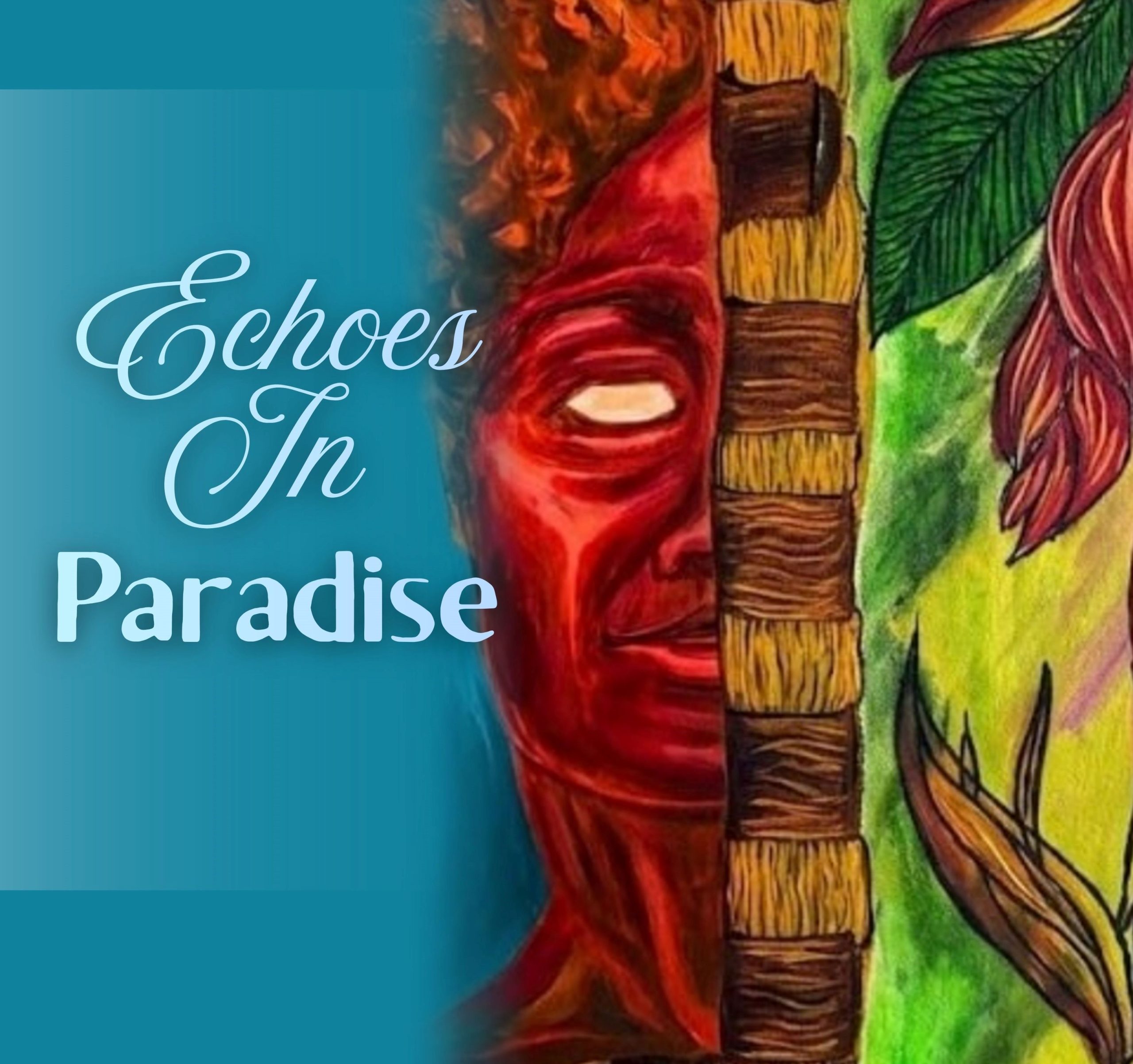
Editorially curated by EXPLORE Fiji
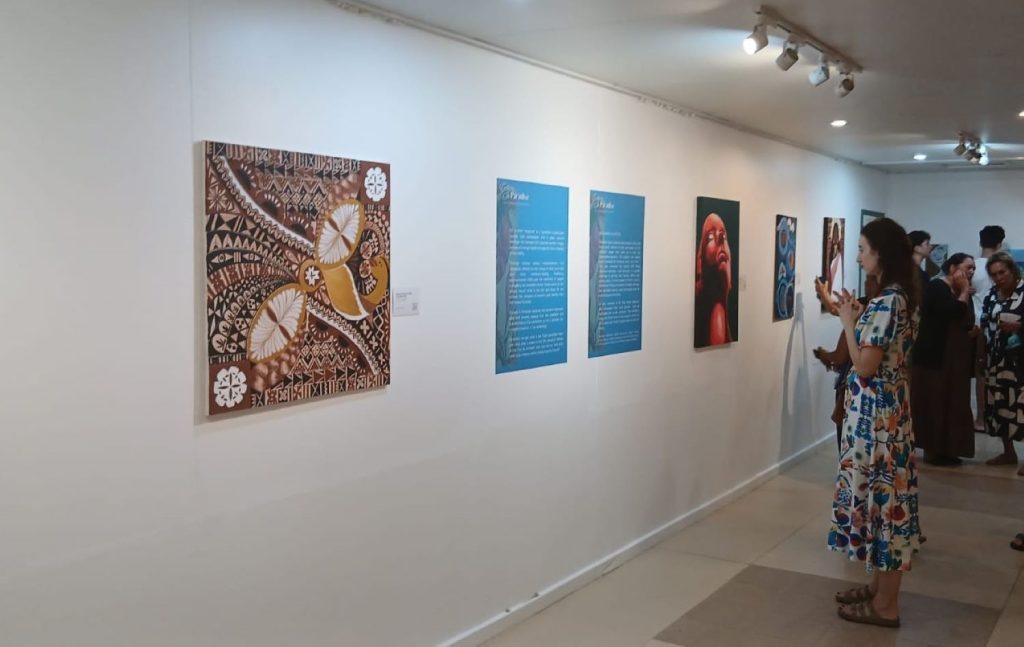
Beneath Fiji’s postcard image of turquoise waters and swaying palms, a quieter conversation is unfolding within the Epeli Hau’ofa Art Gallery at the Oceania Centre for Arts, Culture and Pacific Studies at the University of the South Pacific in Suva. Echoes in Paradise: A Blue Wave Collective exhibition invites viewers to sit with a quiet tension between what is seen and what is felt, between paradise as image and paradise as lived reality.
The exhibition is open until May 6 2026.
Bringing together eight artists working in painting and mixed media practices, the show features Ulamila Bulamaibau, Kaajal Kristika, Atueta Rabuka, Vijayeta Grace Raj, Dr Nicholas Rollings, Nancy Sharma, Suzanne Turaganiwai and Keresi Vosavakamatailada.
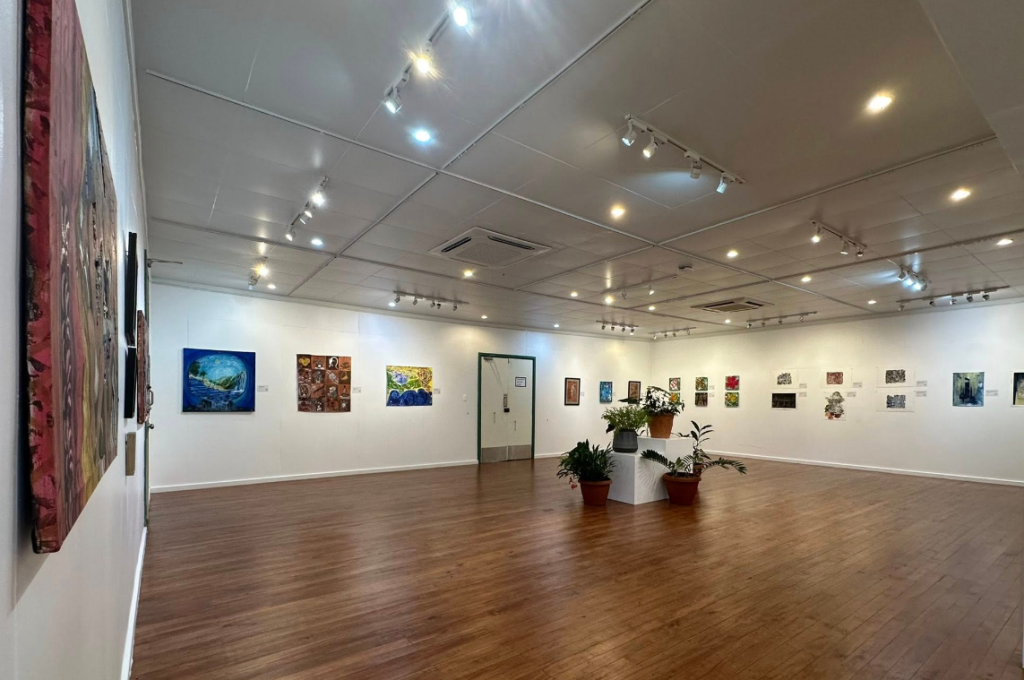
The exhibition does not attempt to resolve this tension between paradise as image and paradise as lived reality. Instead, it leans into it, asking what remains when the idea of paradise is stretched, questioned and expanded beyond the familiar postcard frame.
It explores memory, loss, identity and environmental change in Fiji today, not as postcard imagery but as everyday lived realities. Here, paradise is not fixed. It shifts, shaped by history, culture and the present moment.
New QR codes on each artwork label invite visitors to engage more deeply with the works, reflecting the gallery’s evolving approach to interpretation.
For emerging multidisciplinary artist Atueta Rabuka, the word “paradise” once felt simple and familiar.
“Personally interpret it? Nah, I don’t think I’ve ever really tried to break the word down. I mean, we live in paradise, apparently, so before the exhibition, that fixed image was what ‘paradise’ was to me – that postcard scene of the beach framed by a single coconut tree, a model holding a colourful drink… paradise.”
He was not trying to reject that idea, but to work within it without repeating the same climate conversations people are already tired of hearing.
“And I didn’t want to challenge the idea of paradise either. I’m trying really hard not to use abstract, artsy words or stereotypical language to describe my process… but yes, I knew what I wanted to speak about through my pieces. The challenges were: how do I communicate it, how do I make it subtle, and how do I make it fit under the theme ‘Echoes in Paradise’.”
That led him to expand the idea outward.
“So I went big… from the islands to the planet. Great, so now Earth is the paradise. Now I just have to answer: why is the Earth a paradise? Easy, because it was here before us, already functioning, already abundant, already intelligent…”
Paradise, in this sense, is not constructed. It is something already alive and in motion.
“That idea is in almost every teaching: what goes around comes around (karma), do unto others as you want others to do unto you (Christianity), every action has an opposite and equal reaction (physics). I’m just surprised at how much we say these sayings, but putting it into practice is a different story… lol.”
A moment in Nausori town stays with him.
“This guy threw his rubbish into the small stream behind the Nausori Market, and another man told him not to litter… he replied, ‘I’m the landowner, I can do whatever I want.’ Slack, eh?”
For him, voice is never neutral, it always carries weight.
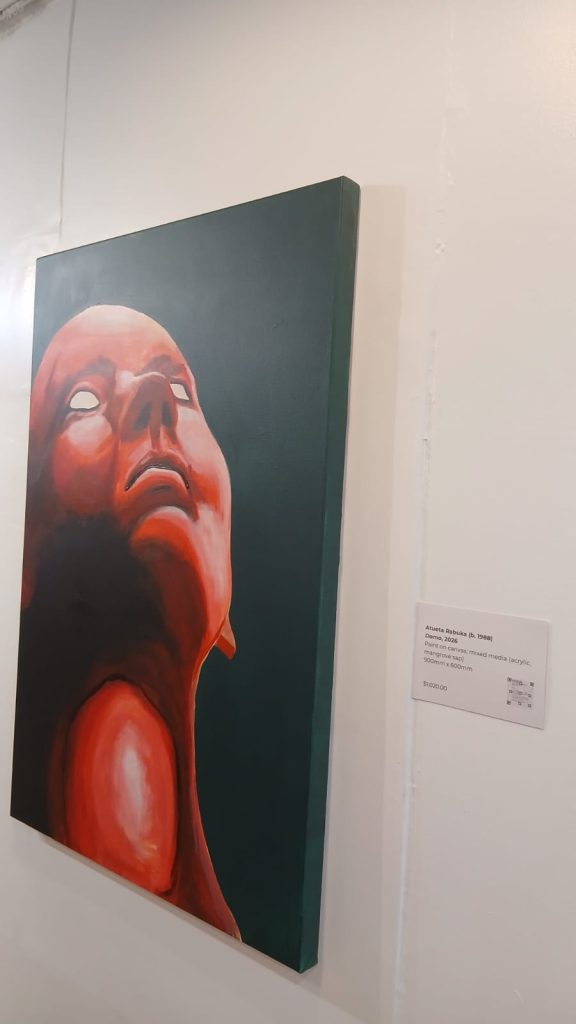
“We are always speaking into a future that’s always listening,” says Rabuka.
In Domo, he incorporates acrylic and mangrove sap, placing “mangrove blood” around the voice box and lips. It reflects his thinking on voice, consequence, and environmental responsibility.
Where Rabuka expands paradise outward into systems and consequence, seasoned artist Ulamila Bulamaibau moves through memory, reflection and lived experience in a more intimate way.
“I visualise a world of possibilities, ideally where there is harmony in how communities relate to each other, where issues are dealt with humanely and with common sense, and where there is consideration for the environment and other creatures as well.”
Her work carries thought and feeling quietly into form.
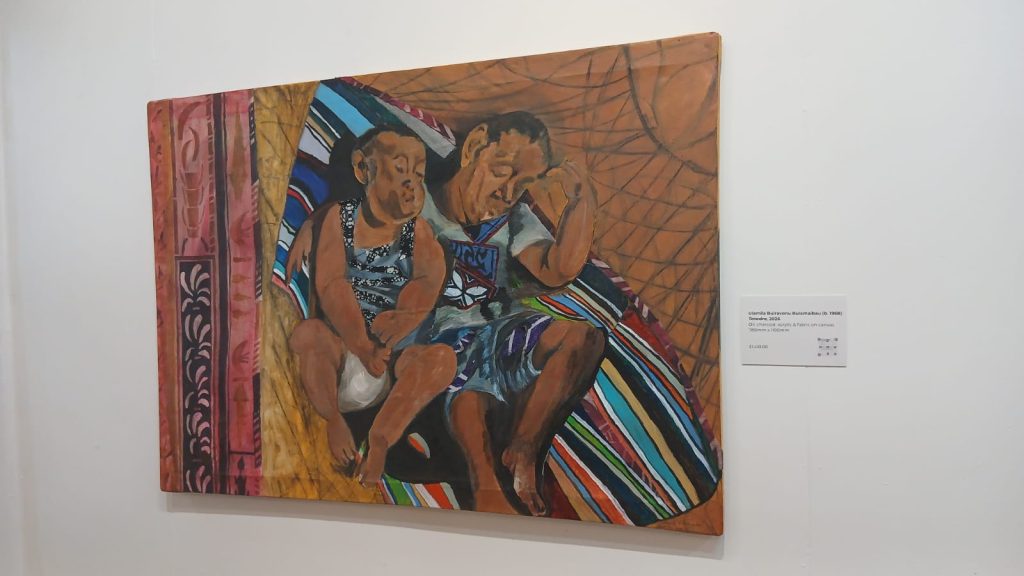
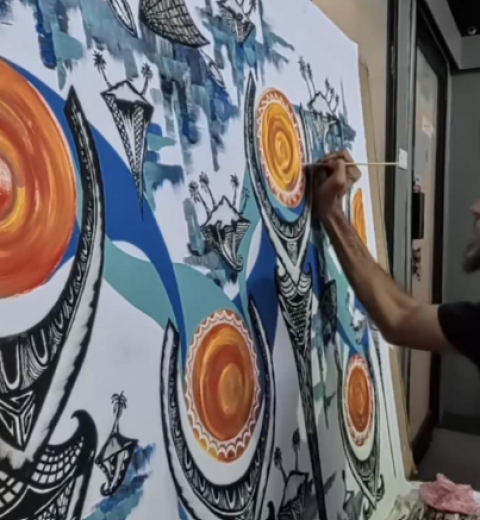
“My paintings relate my thoughts, my experiences, my dreams. In doing so, they act as messengers to my audience or viewers out there. You could say that I see my purpose as an artist as having a greater purpose beyond the colours, the canvas…”
In Echoes in Paradise, she reflects on cultural memory through Veiqia, the traditional tattooing of Indigenous Fijian women.
“That exchange touched me because I went on not wanting to forget but to remember about this tradition, its role in our identity as Indigenous people, its role in history.”
For her, remembrance is active.
“We all have a role to play in being custodians of this planet, our earth, our society, our home, our paradise.”
Her works also point to environmental care, marine life and coastal landscapes, shaped in part by her connection to Lami town, outside the capital Suva.
“There is life that is interdependent on one another for our sustenance and for the future.”
Across the exhibition, a shared idea begins to surface. Paradise is not fixed. It is shaped by how people live, speak and act within it.
For Rabuka, consequence is unavoidable.
“The question is not whether what we say will come back or not… it will!! The question is, in what way will it come back.”
For Bulamaibau, even in difficulty, something remains.
“I hope that people remember that there is beauty still in the world today. Despite the hardships, challenges, violence, drugs and so forth, there is beauty still. You can find it if you look hard.”
She adds, simply: “I always feel that I have not said all but I must stop.”
That unfinished feeling mirrors the exhibition itself. Echoes in Paradise does not seek closure. It leaves space for reflection and questions that continue beyond the gallery walls.
As part of the Blue Wave Collective, the exhibition continues an evolving practice within the Oceania Centre for Arts, Culture and Pacific Studies, where artists engage with identity, environment and future through contemporary Pacific art.
Echoes in Paradise is less about defining paradise and more about learning how to listen to it in a different way.
Entry is free, and the gallery is open on weekdays from 10am to 4pm.
Epeli Hau’ofa Art Gallery
Oceania Centre for Arts, Culture and Pacific Studies
University of the South Pacific
Laucala Bay Road
Suva.
#EchoesInParadise #BlueWaveCollective #PacificArt #Fiji #Suva #FijianArt #ParadiseReimagined #EnvironmentalArt #EXPLOREFiji