Story curated by EXPLORE Fiji®
Somewhere in the Yasawas, a superyacht crew stops thinking about the next destination. The anchor is down, the water is the kind of clear that makes depth hard to judge, and a village sits quietly at the tree line. A child waves from the shore. The captain checks the log and realises they have been in Fiji for four months. Nobody is in a hurry to leave.
Moments like this, repeated across 62 superyachts and 762 cruising yachts in 2025, tell the story of an industry that has quietly become one of Fiji’s most powerful economic engines.
A Record Built on Staying
According to the 2025 Fiji International Yachting Visitors Survey, the yachting sector contributed FJD $57.4 million to the national economy last year, the highest figure recorded in 16 years of data. Direct spending by visiting vessels reached $51.9 million, up 14% on the previous year’s record. The sector is now operating at 123% of its pre-pandemic level, having collapsed to just $5.47 million during the border closures of 2020 and 2021.
The recovery alone is remarkable. What is more remarkable is what is driving the growth.
Superyachts visiting Fiji in 2025 stayed an average of 160 days, up from 56 days the year before. These are not brief port calls between destinations. These are extended seasons, with crews settling into routines, guests flying in and out across months, and vessels becoming floating bases for exploring Fiji’s diverse waters, from the Mamanuca and Yasawa groups to the islands of the north and the remote Lau archipelago in the east.
A yacht staying 160 days spends very differently from one staying a week. It buys provisions repeatedly from local markets. It hires Fijian tradespeople for maintenance and repairs. It puts guests on domestic flights to outer islands. That spending reaches marine businesses, local suppliers, remote island communities and small family operations well outside the typical tourist trail.
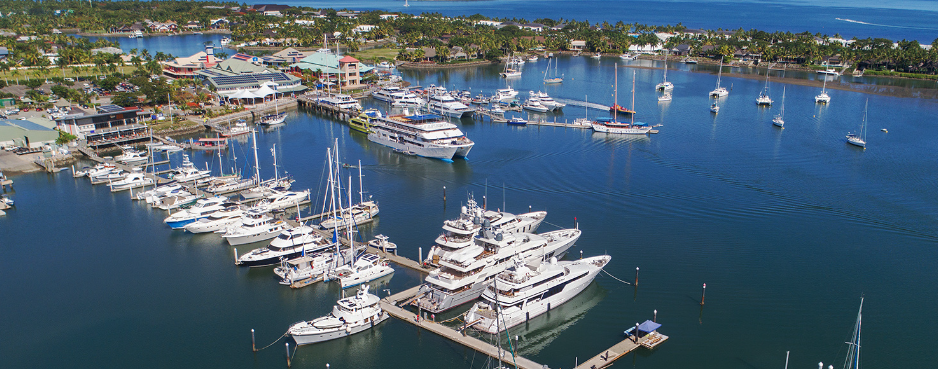
Cynthia Rasch, Chief Executive of Port Denarau Marina located on Denarau, has watched this shift closely. “The real opportunity is not only in attracting more vessels, but in encouraging them to stay longer and spend more locally,” she says. When a vessel stays for months rather than days, the benefits flow through provisioning, local repairs, crew spending, domestic travel and tourism experiences across the islands.
The Charter Revolution
In 2023, Fiji adjusted its charter regulations, making it significantly easier for visiting yacht owners to operate commercial charters in Fijian waters. It was not a headline moment. But for the yachting industry, it unlocked a market that had been largely dormant.
Charter revenue has since grown by more than 3,500% in two years. In 2025, eight vessels completed 241 days of commercial charter, generating nearly FJD $3 million, a new record.
Rasch describes charter tourism as particularly valuable for the wider economy. “Charter is an important opportunity for Fiji because it brings high-value visitors into the country in a very targeted way,” she explains. “These guests are often travelling through the islands, engaging with local communities and using services across different parts of Fiji. It is a form of tourism that can generate strong value without needing large visitor numbers.”
That last point matters. Fiji does not need to be crowded to be prosperous. What the yachting data shows is that depth of engagement, measured in days spent, in local spending, in genuine community contact, creates more lasting economic value than sheer visitor numbers alone.

What Keeps Them Coming Back
The 2025 survey recorded a 95% to 100% recommendation rate across all visiting yachts, with superyachts reporting 100% intent to return. In a market where wealthy, well-travelled guests have the entire Pacific, Caribbean and Mediterranean to choose from, that figure is extraordinary. When survey respondents explain why, the answer is consistent. It is not the reefs, though those are world-class. It is not the anchorages, though Fiji’s waters are home to some of the finest cruising grounds on earth, stretching from the Mamanucas and Yasawas to the islands of the north and the remote Lau Group. It is the Fijian people.
Central to that experience is sevusevu, the traditional kava ceremony through which a visitor seeks permission to enter a village. For many visitors arriving by dinghy at a remote island, it is the memory they carry home longest. The practice is very much alive and growing across Fiji’s cruising grounds. The industry has noted, however, the importance of ensuring it is approached with consistency and respect as visitor numbers continue to grow.
Rasch frames Fiji’s position plainly. “This is high-value, low-volume tourism, and it fits well with Fiji’s broader tourism direction,” she says. “Fiji’s strengths include natural cruising grounds, island hospitality and cultural experiences. The opportunity now is to continue building on that momentum and make sure more of the value stays within the Fijian economy.”
The Work Still Ahead
The 2025 industry report is candid about the gaps between Fiji’s reputation and its current reality on the water. Navigational charts need updating. Reef markers are insufficient in key areas. Customs clearance remains a frustration for many visitors, with strong demand across all vessel types for electronic processing and simpler paperwork. The survey also recorded complaints about marina fees across Fiji, with the report specifically citing instances of “fee gouging” and “hidden costs” that risk discouraging repeat visits.
These are solvable problems. But they matter, because a destination that earns 100% return intent cannot afford to let avoidable frustrations chip away at what has taken years to build.
The report itself is clear on what comes next. The focus must shift from marketing to operational efficiency, ensuring economic benefits continue flowing into local businesses and communities, while maintaining sustainability and protecting Fiji’s marine environment. The numbers point in the right direction. The foundations now need to be strong enough to carry what is being built on top of them.
Fiji’s waters have always been extraordinary. What 2025 confirmed is that the world’s most discerning sailors know it, and increasingly, they are in no rush to leave.
Data sourced from the Fiji International Yachting Visitors Survey, 2025 Annual Industry Report, a 16-year comparative analysis compiled by the Fiji Yachting Industry.
#EXPLOREFiji #FijiYachting #SuperyachtFiji #CruisingFiji #VisitFiji #FijiTourism #BlueEconomyFiji #Yasawas #Mamanucas #LauGroup #Sevusevu #FijianCulture #SailingLife #LuxuryTravel #PacificSailing #PortDenarauMarina #SouthPacific