An EXPLORE Fiji® special feature
The internationally acclaimed director behind The Conch is using the Pacific Arts Residency at USP’s Oceania Centre in Suva, Fiji, to honour her late father’s island, where erosion threatens far more than the shoreline, and she hopes to create a theatre work for children.
Some stories begin with a question. Others begin with a place that calls a person home.
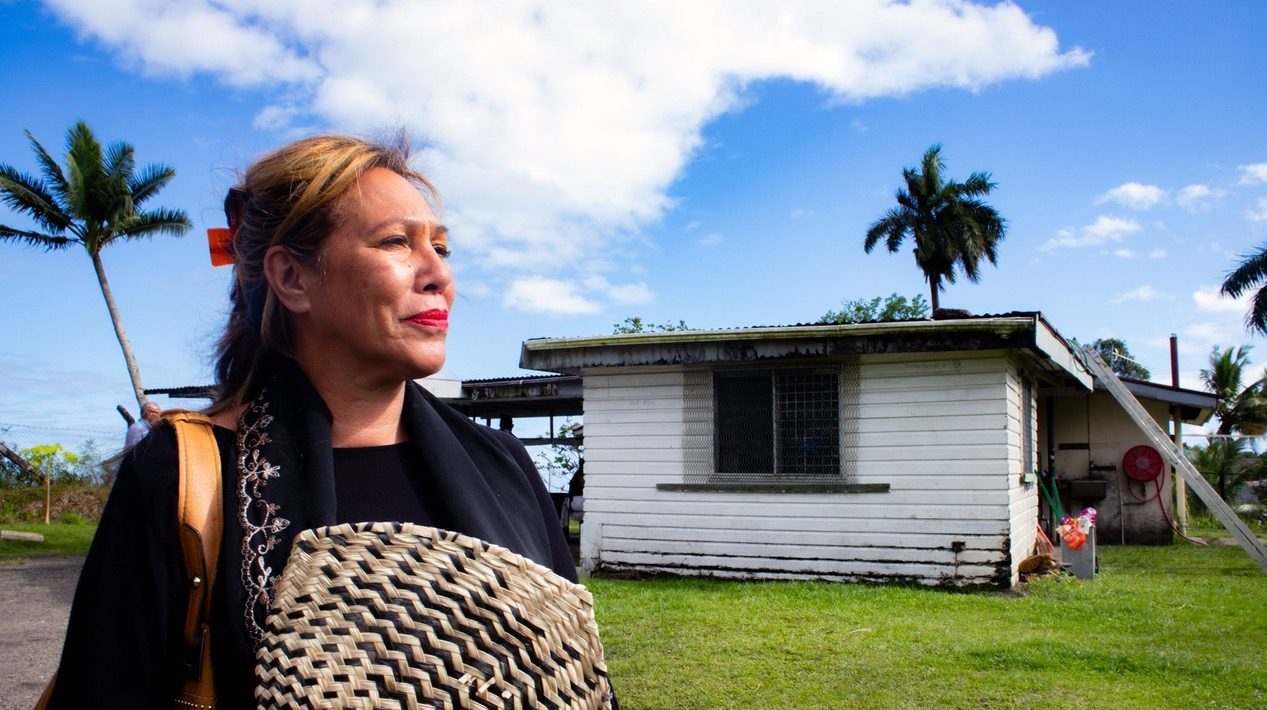
For Nina Nawalowalo ONZM, theatre and film director, artistic director and co-founder of Wellington-based Pacific theatre company The Conch, the story she is developing in Fiji begins with both.
She is one of three iTaukei women artists in the Pacific Arts Residency at the University of the South Pacific’s Oceania Centre for Arts, Culture and Pacific Studies in Suva. The residency brings together established artists from Aotearoa New Zealand, Australia and Fiji to explore climate change and its profound impacts across the Pacific, with the six-week programme running from October 1 to November 12, 2026. Nina is researching and prototyping a new work connected to Kadavu, her late father’s ancestral home.
Kadavu, Fiji’s fourth-largest island, lies about 88 kilometres south of Suva, and Tavuki is where her father, Ratu Noa Niubalavu Nawalowalo LLB, came from. The work explores how climate change is reshaping Pacific communities, but Nina’s starting point is the relationship between people and their vanua (the land, its people and the customs that bind them), the knowledge carried across generations, and the right of communities to tell their own stories.
A legacy of service
Ratu Noa became the first Fijian admitted to practise as a barrister and solicitor by the Supreme Court of Fiji in 1964, following a motion by Munro, Warren, Leys and Kermode, the firm where he worked. Nina is now making a documentary about his life, and her research has revealed a man guided by faith, a belief in justice and a commitment to serving others.
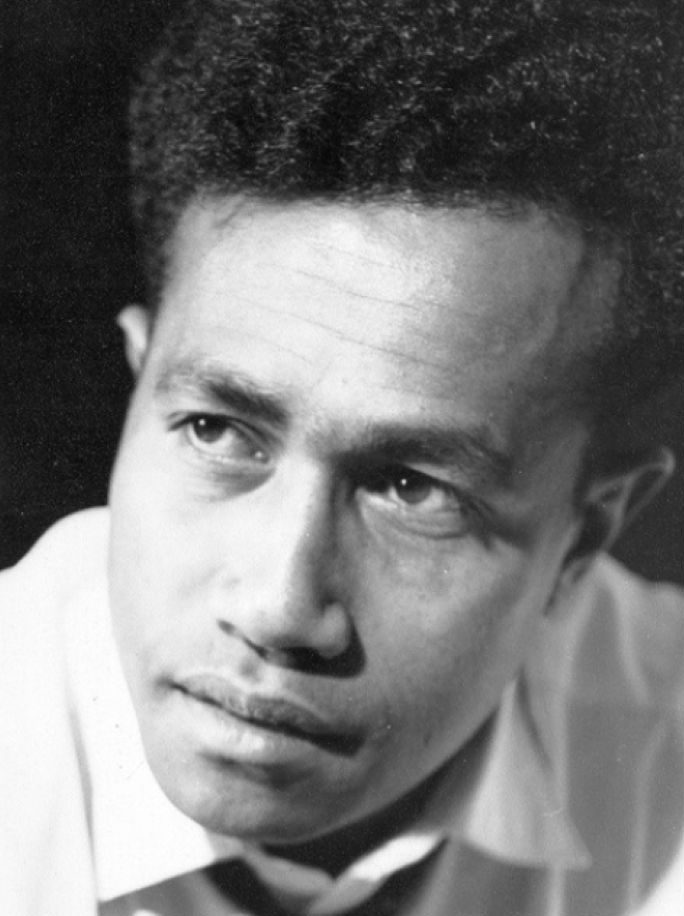
Nina says her father’s example guides her work.
“His path and Vakaturaga (the chiefly way) are a constant inspiration to me. Though my work is in the arts I am driven by the service of his legacy, the honouring of my Nawalowalo name and Tavuki, Kadavu. Every day of the creative process requires courage, stepping into the unknown driven by seeking to tell a story which will represent and be of value to the people.”
Before beginning the project, Nina travelled to Namuana in the Tavuki District, where she presented the sevusevu and asked permission to tell what she calls “our story.” She lived in Fiji as a small child, and the place never left her.
“The deep imprint of the Vanua on my heart and senses is always there and means that coming here, is coming home,” she explains.
Whose story is it to tell?
Story sovereignty sits at the centre of her thinking.
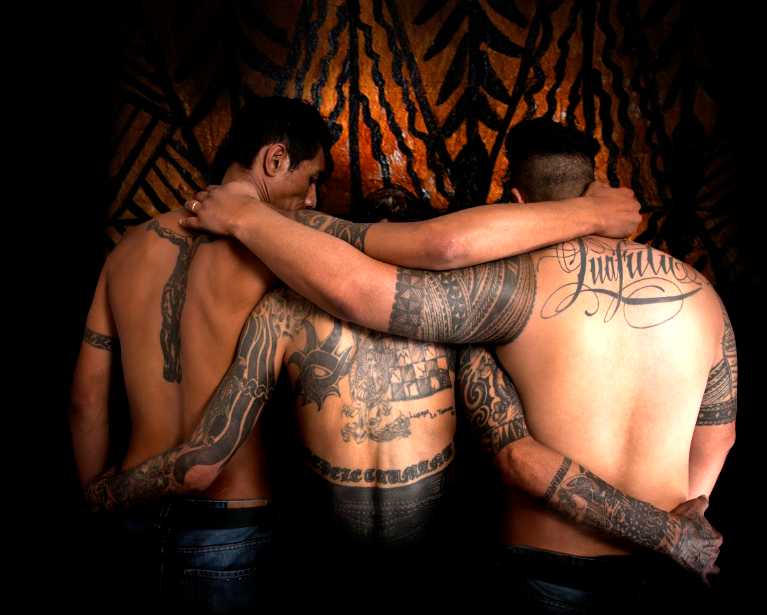
Photo: Christchurch Arts Festival.
She explains her own map of identity this way: “My lineage, like the Masi patterns, is a map to guide my return, not to a generic place, but a specific place, Tikina, Koro, Yavu, Yavusa” (district, village, house foundation and clan).
“I believe that truths that can be universally useful can only be found through a journey into the specific,” she says.
Climate change beyond the statistics
“The impacts of climate crisis are real for Kadavu and all of Oceania,” she says.
“Erosion is not only of the shoreline, it is the gradual erosion of our culture and the remarkable way it expresses how we are interwoven with the land and ocean.”
“This is our lineage, we have lived in harmony with the environment for thousands of years.”
“People are daily bombarded by statistics, policy comes and goes, millions of dollars are spent without benefitting the people.”
“We have played no part in the creation economy behind the forces driving climate change, and yet we are the most under threat,” she observes.
“This is the most urgent story of our time,” she says.
Her residency coincides with a significant moment for the region, with Fiji co-hosting the Pacific Pre-COP31 in Nadi from October 5 to 8, ahead of November’s COP31 in Türkiye. Kadavu knows the stakes. The Pacific Community reports that Tropical Cyclone Harold struck the island as a Category 4 storm on April 8, 2020, destroying homes and causing coastal erosion and wave flooding.
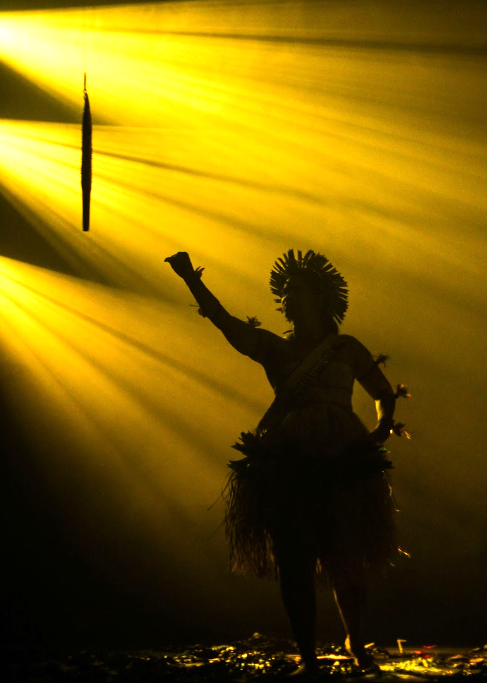
Nina believes theatre and film can move audiences to feel, as well as listen, and for Kadavu that means making space for the voices of the vanua. “In our ways we moved to the heartbeat of the earth in frantic race to find solutions we need to slow down to this heartbeat, experience a compassion for our shared humanity and shared destiny,” she reflects.
Following the patterns of masi
The project builds on Nina’s body of work that includes Vula, a visual theatre production staged on a flooded stage that toured internationally, and Masi, a work inspired by her parents’ love story and the making of Fijian bark cloth, known as masi.
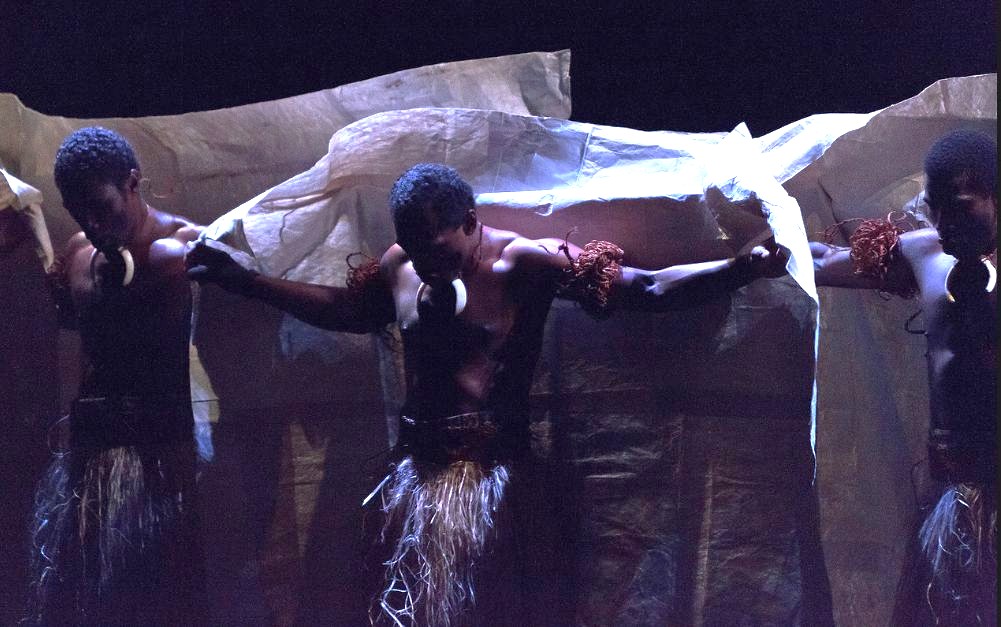
Photo: New Zealand International Festival of the Arts.
“I have told many Pacific stories, but the pathway revealed is ultimately one of return, a homecoming,” she says.
This residency turns that return towards a story unique to Kadavu.
Three artists, one creative space
Nina is joined by fellow iTaukei artists Emele Ugavule and Ulamila Buiravonu Bulamaibau at a reception hosted by the Oceania Centre alongside New Zealand High Commissioner Greg Andrews.
“Here were three iTaukei women artists standing together in the fullness of their creative power. This is not only rare but historic,” Nina recalls.
She credits Creative New Zealand, Creative Australia and the Oceania Centre at USP for recognising the residency.
“Art, like food, is a necessity and has always been to the people of Oceania for thousands of years,” she says.
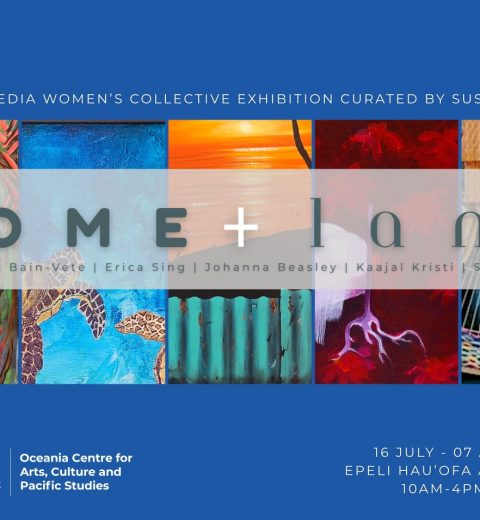
Nina recalls the words of the Centre’s founder, the late Epeli Hau’ofa, who established it at USP in 1997: “Ocean is vast, Oceania is expanding. Oceania is hospitable and generous, Oceania is humanity rising from the depths of brine and regions of fire deeper still, Oceania is us.”
A theatre work for the children
The six weeks are devoted to research and prototyping. Nina is committed to reaching children growing up amid the climate crisis and the uncertainty it brings to their future.
The work will be for Pacific children, though it will be given first to the children of Kadavu.
“I am an artist and so my answer to this call is to do what I can, with what I have, where I am and with those who will join me,” she says.
A story still unfolding
The Kadavu project gathers the threads running through Nina’s career: her father’s service, her ancestral vanua and her faith in the arts. For the children at its heart, she offers this hope:
“In the storm of the now, we must comfort them again, share the truths of our poetry to inspire them, in order that their footsteps are not only to what lies ahead, but also those of return.”
#NinaNawalowalo #EXPLOREFiji #PacificArts #ArtsAndCulture #Kadavu #ClimateChange #PacificStorytelling #CulturalHeritage #StorySovereignty #USP