Rare drawings, artefacts and contemporary voices bring a pivotal moment in Fiji’s history to life.
An EXPLORE Fiji® story in partnership with our Legacy Cultural Partner, the Fiji Museum, bringing Fijian heritage and stories to life.
Chartres, France | April 4 – August 2, 2026
Suva, Fiji | July 18 2026 – January 10 2027
In October 1838, two French ships appeared on the horizon of Fiji’s islands. For the communities watching from shore, the arrival was part of a Pacific world that was rapidly changing. For the young artist aboard one of those ships, it became a moment worth recording. Nearly two centuries later, those encounters are being revisited through a unique twin exhibition connecting France and Fiji.
Visitors to the historic cathedral city of Chartres, about an hour southwest of Paris, can experience the exhibition at the Musée des Beaux-Arts de Chartres from April 4 to August 2 2026. The companion exhibition opens in Suva at the Fiji Museum on July 18, offering an intimate look at Fiji’s own collections.
Inside the elegant halls of the Musée des Beaux-Arts de Chartres, a new exhibition will open that explores a remarkable moment in Fiji’s history, mirrored in Suva through a parallel presentation shaped by Fiji’s own collections.
Titled Fiji 1838: Face to Face, and presented in Chartres as Fidji 1838: Face à Face, the twin exhibitions connect two parts of the world through a shared moment in time. Through rare drawings, historical artefacts and contemporary Fijian voices, the project brings to life a brief but powerful encounter between Fijians and French explorers nearly two hundred years ago.
“The exhibition explores a key period in Fiji’s history through the eyes of Ernest Goupil,” explains Jeff Fox, Manager Collections at the Fiji Museum. “His drawings, together with objects from that time, allow us to revisit a moment of encounter between Fijians and Europeans that still resonates today.”
A Short Visit That Became History
The story begins in October 1838 when the French corvettes, the Astrolabe and the Zélée, sailed through the Fijian archipelago.
The ships were part of the third Pacific voyage of the French navigator Jules Dumont d’Urville. The expedition aimed to conduct scientific research, document Pacific cultures, and find the southern magnetic pole and explore the Antarctic region.
During this voyage the expedition spent just two weeks in Fiji. Yet those brief days took place during a time of significant change across Oceania.
Across the Pacific, societies were adapting to growing contact with European and American traders, missionaries, and settlers. Political alliances were shifting. Trade networks were expanding. Local leaders were navigating complex relationships with foreign visitors.
In Fiji, traditional authority structures were also evolving. Rivalries between powerful chiefs were intensifying as new alliances and access to European weapons began reshaping the balance of power.
It was within this atmosphere of transformation that a young French artist began quietly recording what he saw. His name was Ernest Goupil.
The Artist Who Observed Fiji
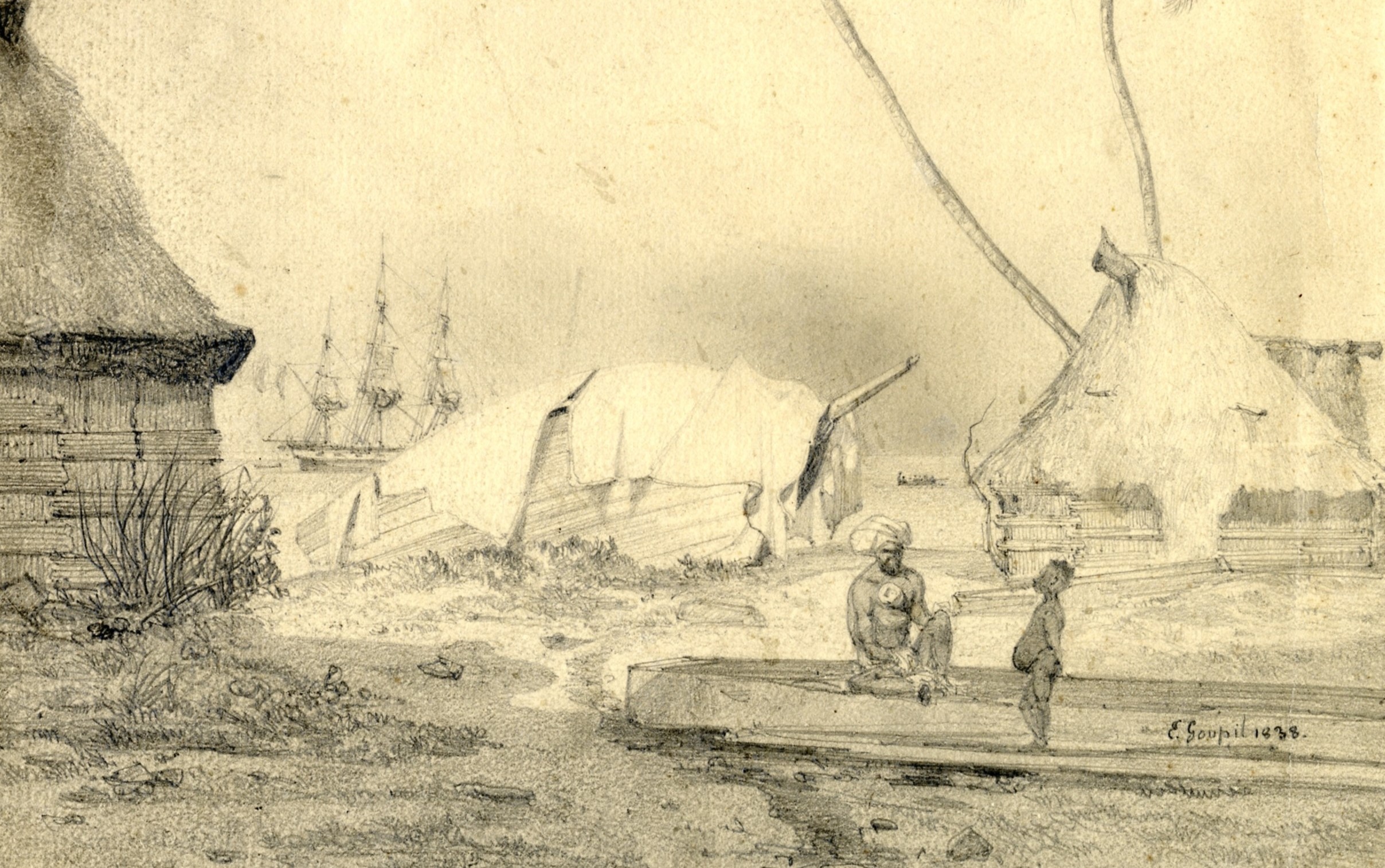
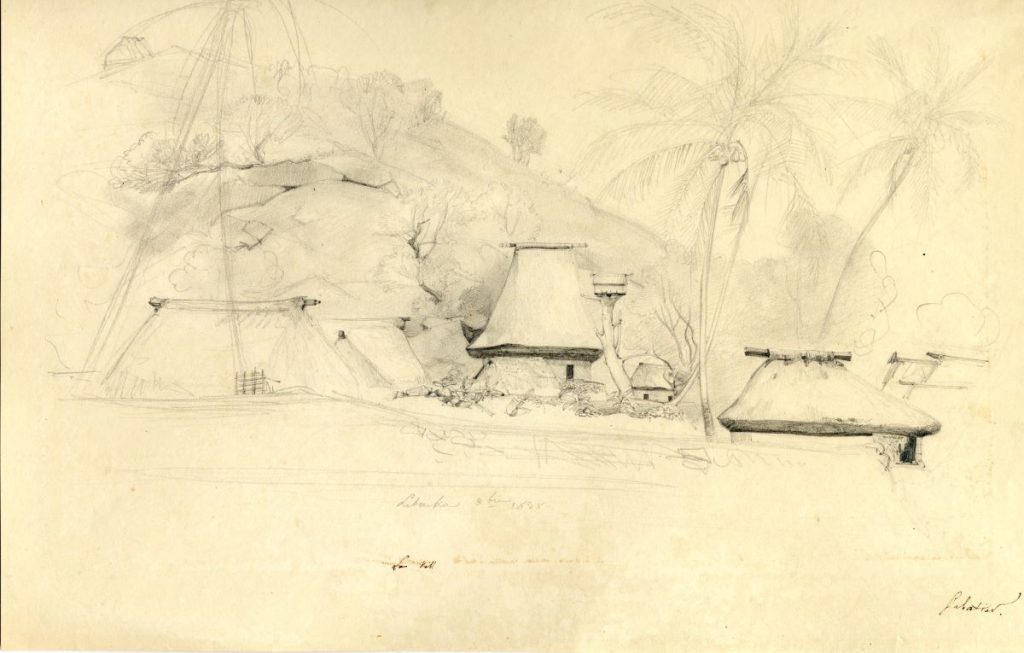
Goupil served as the expedition’s illustrator. During the French visit, he produced a series of drawings that captured landscapes, architecture, sailing canoes, and scenes of everyday life. His sketches reveal carefully observed details of village interiors, ceremonial spaces, and the people he encountered.
According to Stéphanie Leclerc Caffarel, co-curator of the French exhibition and curator of the Oceania collections at the Musée du quai Branly – Jacques Chirac in Paris, the drawings stand out for their clarity of observation.
“He was a keen observer and a talented artist,” she explains. “His depictions of daily encounters are not shaped by the racist attitudes often found in nineteenth-century images. He simply represented what he saw and experienced.”
Among the most striking works is a portrait of Ratu Tanoa Visawaqa, the Vunivalu of Bau.
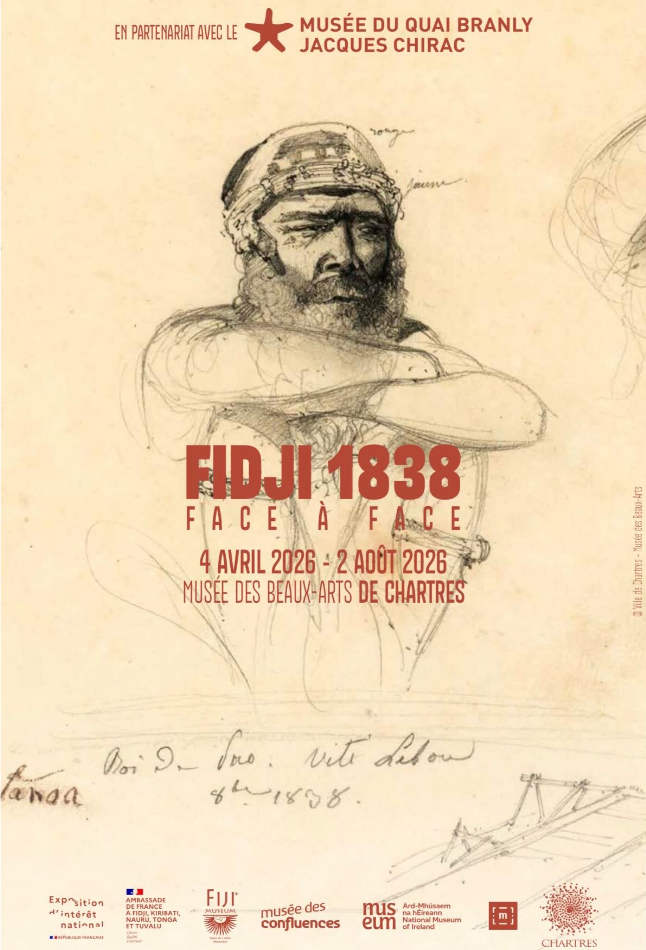
“Goupil was a gifted portrait artist,” Caffarel says. “His drawing of Tanoa Visawaqa is one of the jewels of the Chartres collection.”
Unlike later engravings produced in Europe, the original drawing captures subtle details of the chief’s ornaments and expression, providing historians with rare visual insights into Fijian leadership at that time.
Encounters That Shaped History
The exhibition also explores several encounters that occurred during the French visit. One of the most dramatic involved the French retaliation against the island of Viwa following the killing of a French trader and members of his crew. The punitive expedition led to the burning of the chiefly village.
“These encounters took place during a very short but decisive moment in Fiji’s history,” Caffarel notes. “The drawings, sailors’ accounts, and museum collections together bear witness to events that shaped relationships between local chiefs and foreign visitors.”
The French expedition also visited places that would later play key roles in Fiji’s national story, including Bau and Levuka. The future capital, Levuka already hosted a small but growing community of foreign residents, among them the American trader David Whippy, who acted as an intermediary between Fijians and visiting Western sailors.
A New Generation of Curators
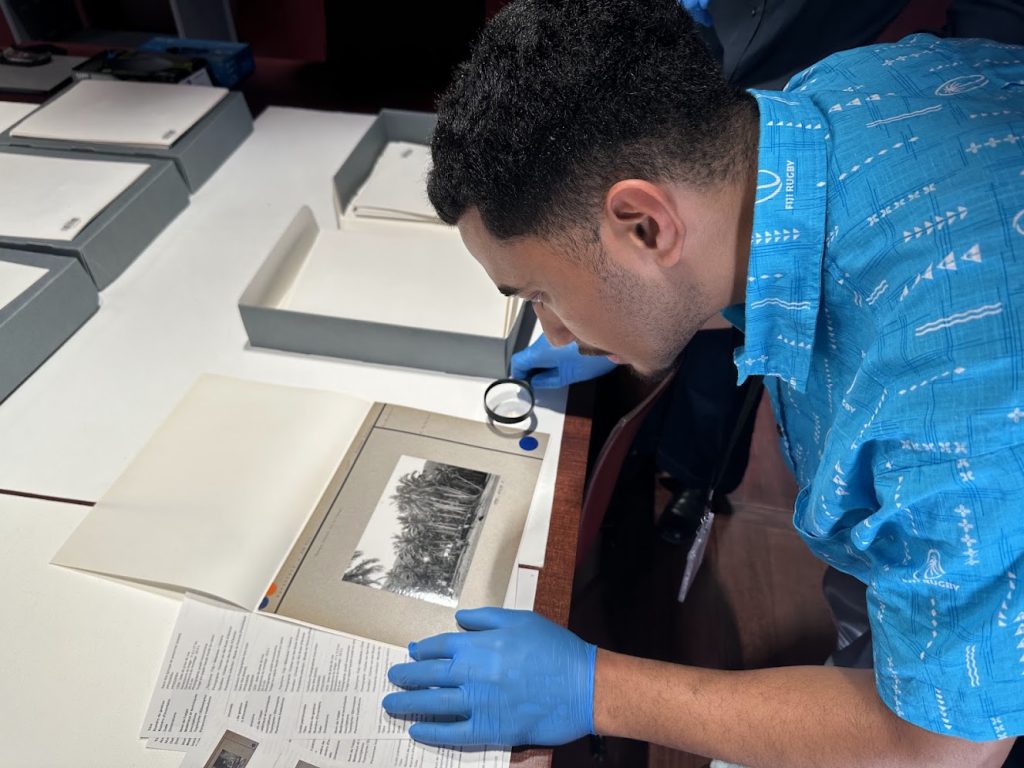
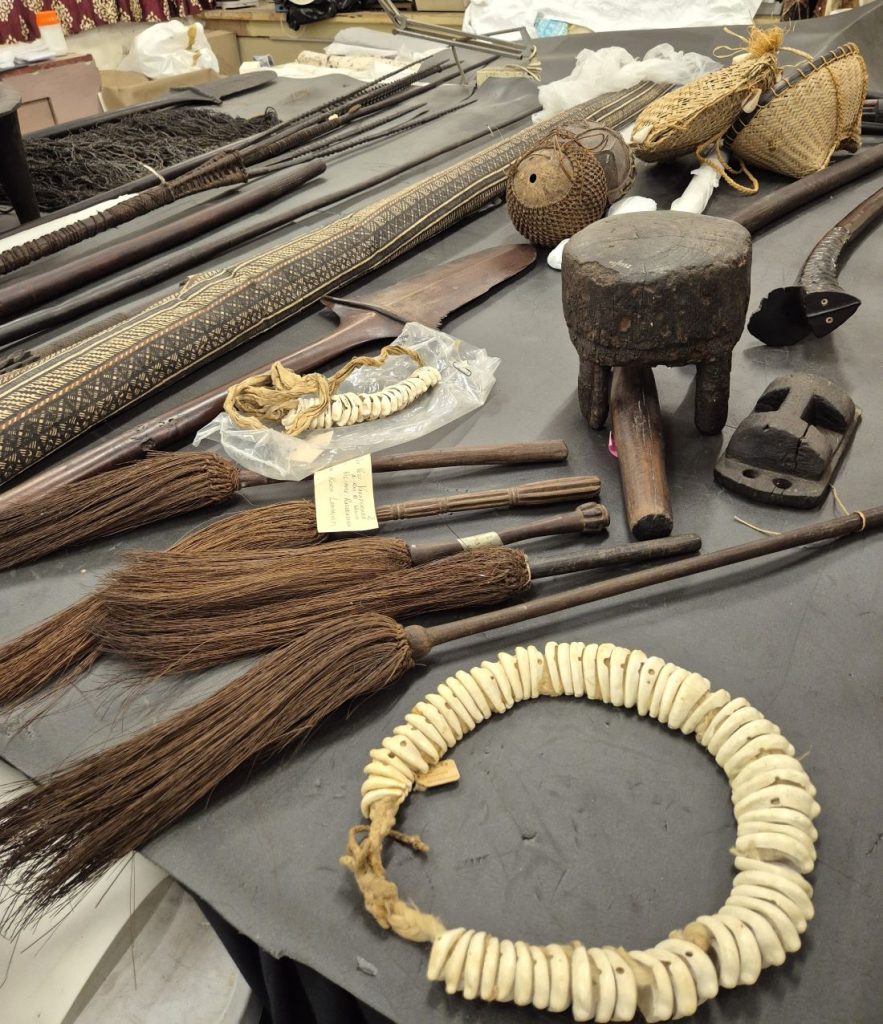
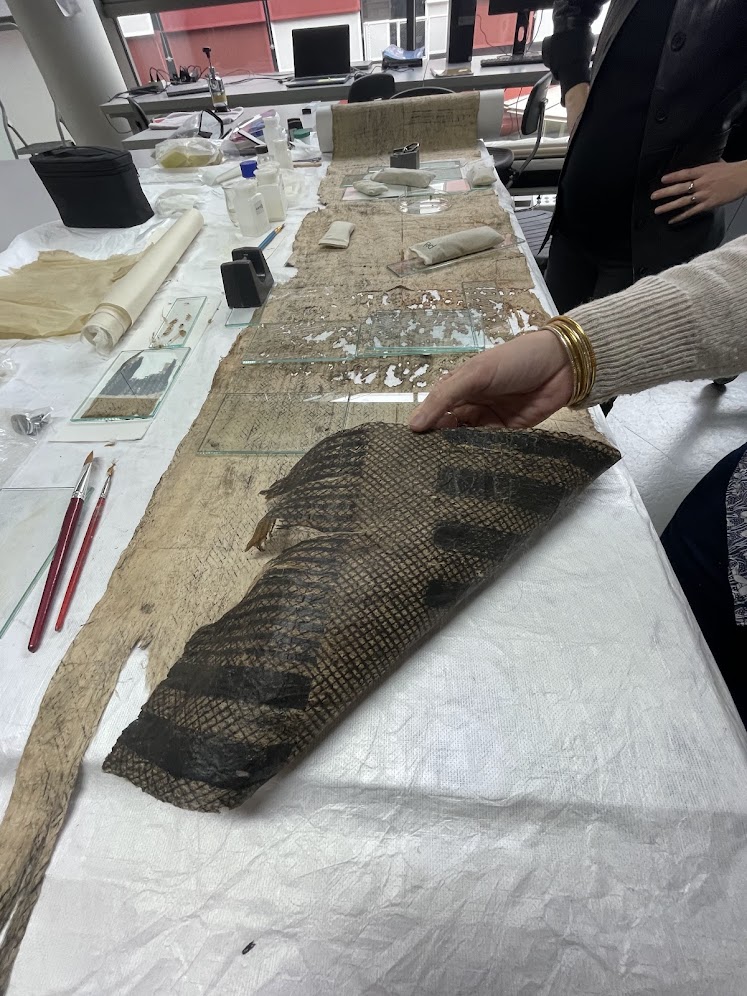
Another important part of the project is a professional exchange between Fiji and France. Fiji Museum’s Collections Digitisation Project Intern Officer Josaia Tuivanua recently returned from Paris, where he participated in a curatorial residency connected to the exhibition. Working alongside staff at the French museums, he assisted with conservation work, mount making, and exhibition preparation.
Now back in Fiji, he is helping to develop the Suva exhibition, including selecting artefacts, writing interpretive text, and assisting with installation. His experience in France helps ensure that the narrative remains consistent between the two exhibitions while adapting it to Fiji’s own collections.
A Collaboration Across Continents
The exhibition itself is the result of collaboration between museums in France and Fiji. The project was first developed between the Musée du quai Branly in Paris and the museum in Chartres before the Fiji Museum joined the partnership.
Fox explains that the idea of twin exhibitions emerged after practical challenges made it difficult to transport the original objects to Fiji.
“Borrowing the original artworks and artefacts would have involved significant costs and logistical challenges,” he says. “But we realised the story could be told just as effectively using objects from the Fiji Museum collection alongside high-resolution reproductions of the drawings.”
In Chartres, visitors will see the original works by Goupil along with objects collected during Dumont d’Urville’s voyage. In Suva, the exhibition will present digital reproductions of the drawings together with historical artefacts from the Fiji Museum collection dating to the same period.
Exhibition Catalogues
To accompany the exhibitions, catalogues have been prepared in both France and Fiji. There will be a French language catalogue for the Chartres presentation, and an English language catalogue for the Fiji exhibition. The aim is to include Vosa vakaViti text for chapters written by Fijian scholars, allowing the language itself to serve as a contemporary response. Where possible, some of the Fiji Museum objects will also be featured, connecting the printed pages to the artefacts visitors see on display.
Contemporary Voices Join the Story
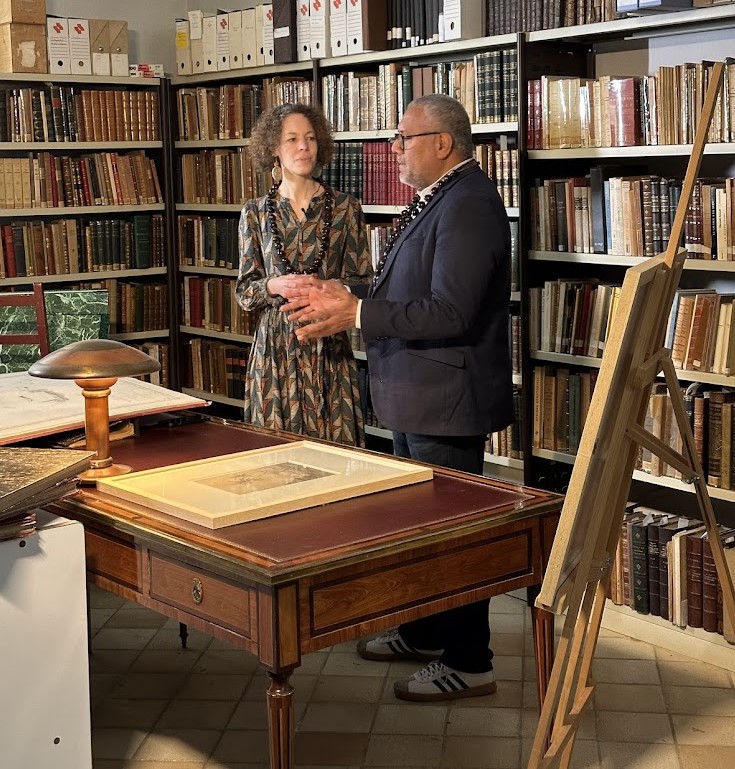
The exhibition also includes contemporary responses from Fijian writers, scholars, and artists. Among them is Fijian poet and artist Samson Verma, co-curator of the French exhibition, who has created new works inspired by the exhibition.
“We wanted fresh voices and narratives from Fijians,” Verma explains. “It was important that the descendants of those whom Goupil illustrated could respond to these images and bring their own perspectives.”
His artistic response centres on the concept of Lacadrau, a Fijian word with layered meanings.
“Lacadrau is the word our grandmothers used for a patchwork quilt,” Verma says. “But it also evokes the sight of hundreds of sails on the horizon. Fiji today is a Lacadrau – a patchwork of influences and histories woven together over time.”
Fijian Voices and Interpretations
The exhibition actively highlights Fijian perspectives and interpretations. Chapters of the catalogue feature contributions from Fijian scholars and artists, offering diverse worldviews and contemporary responses to the historical events captured by Goupil. Among the writers are a diplomat, an international relations specialist, and a traditional cultural specialist and historian. Each brings a unique professional lens anchored in indigenous Fijian identity.
Verma emphasises the role of women in Fijian history and culture, which is often underrepresented. Women were essential in weaving the sails for Drua, the traditional Fijian war canoes, creating the strength and mobility that underpinned their communities’ power. The exhibition and catalogue recognise these contributions, showing how craft, skill, and social organisation intersected with leadership, mobility, and cultural continuity.
His Lacadrau-inspired works also reflect this layered metaphor. Just as quilts were assembled from many pieces, and sails crafted by women enabled the movement of entire communities, Fiji today represents a patchwork of influences, histories, and cultural resilience. The exhibition presents these interpretations alongside historical objects, inviting visitors to see Fiji’s past and present through Fijian eyes.
The Exhibition Experience in Suva
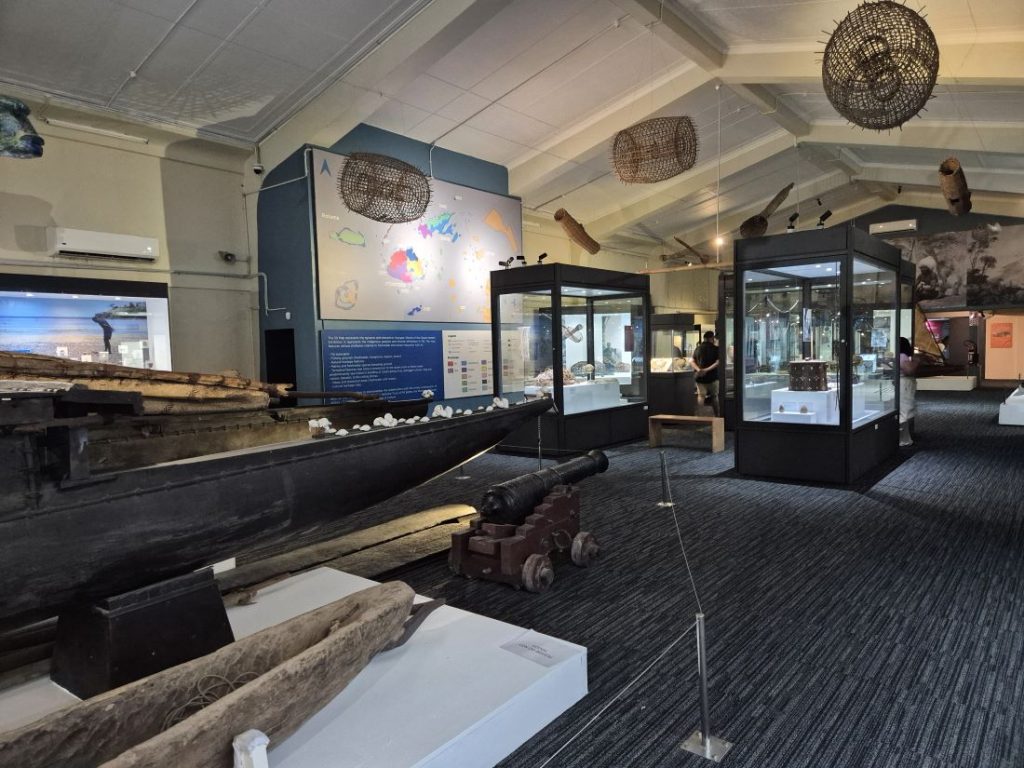
While the Chartres exhibition will take place in the grand spaces of a former episcopal palace, the Suva exhibition will offer a more intimate experience. It will be staged in the mezzanine gallery of the Fiji Museum, which sits in the heart of the Fijian capital’s lush, tranquil Thurston Gardens. The scale of the gallery allows visitors to immerse themselves in the scenes depicted by Goupil.
“The setting in Suva is quite different,” Fox says. “But that intimacy actually allows us to bring visitors closer to the scenes and connect them directly with objects from our own collections.”
The Suva exhibition will also place a strong emphasis on contemporary Fijian responses. Visitors will encounter new works alongside historical material, including Verma’s poem O Voya and a contemporary poem by local poet Camari Serau, offering personal and creative reflections on the exhibition’s themes.
There are also plans to collaborate with contemporary masi makers through the Fiji Arts Council to produce large-scale works responding to the exhibition, as well as jewellers creating pieces inspired by traditional body adornments. These evolving contributions aim to extend the conversation between past and present.
The exhibition will also run alongside Na Cagi ni Veisau, an existing Fiji Museum exhibition focused on the revival of veiqia and liku making. Its themes of cultural renewal and continuity closely align with the contemporary responses explored in Fiji 1838.
Within the mezzanine gallery, different parts of the space will highlight these elements. One section will focus on modern masi, poetry, and body adornment, while another will feature the museum’s digitisation work. Here, visitors will gain insight into how historical collections are being preserved and reinterpreted for future generations, offering a contemporary perspective on cultural heritage.
Artefacts selected from the museum’s collection will help illustrate life in Fiji during the early nineteenth century. These may include weapons, ornaments, pottery, mats, and other items dating from the early to mid-nineteenth century. Together they reveal the craftsmanship and cultural knowledge that shaped daily life in Fiji at that time.
Face to Face with History
The subtitle of the exhibition, Face to Face, reflects the spirit of the project. In 1838, French sailors and Fijian communities encountered one another during a brief but memorable visit. Nearly two centuries later, historians, artists, and museum professionals from Fiji and France are meeting again through collaboration and dialogue.
Fox hopes visitors will see the exhibition not only as a look into the past but also as an opportunity for reflection.
“Events in the past still resonate today,” he says. “Museum collections can help us understand that history, and they can also help revive cultural knowledge and traditions for future generations.”
For visitors in Chartres and Suva alike, Fiji 1838: Face to Face offers a rare chance to step into that moment in history and see it anew.
Photos courtesy of the Musée des Beaux-Arts de Chartres, Musée du quai Branly – Jacques Chirac, and the Fiji Museum.
#Fiji1838Exhibition #FijiMuseum #FijianHeritage #CulturalConnections #EXPLOREFiji